Plate 016 — Wargames
REF: BF-GME-016BattleFleet: Pacific War Naval Strategy Game
BattleFleet: Pacific War extended the classic Battleship game into a turn-based naval campaign spanning Pearl Harbor to Iwo Jima, with mission-based objectives, Death-Match and Free Hunt scenarios, and in-mission unit production.


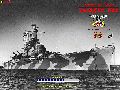


The Pacific Campaign, From Pearl Harbor to Iwo Jima
BattleFleet: Pacific War is a turn-based naval strategy game built as an extension to the classic Battleship game, in which ships, planes and submarines can move across the map rather than sitting fixed on a single grid. Its missions, Death-Match battles, Free Hunt scenarios and campaigns follow the Pacific War roughly in chronological order, from Pearl Harbor and Midway through to the fighting around Iwo Jima and Leyte. Objectives across these missions include conquering enemy ports, defending friendly ports, destroying enemy ships and escorting a transport convoy to a friendly port, and a player can purchase new ships, planes and submarines during a mission rather than starting with a fixed fleet. Unlike the fixed 10x10 board of classic Battleship, the terrain here is part of the challenge: a mission map can include open ocean, islands, and both major and minor ports that shape where a fleet can safely move.
The real chronology behind that setting runs from the December 1941 attack on Pearl Harbor through the carrier battles of the Coral Sea in May 1942 and Midway the following month, on through the June 1944 carrier battle in the Philippine Sea, and into the final island campaigns at Iwo Jima and Okinawa in 1945.
Missions by Theatre and Nation
The mission set spans dozens of named engagements, each tied to a particular navy or air force and marked in the game's own mission list with a national flag icon. A player could take either side of most engagements, fighting for or against the United States, Imperial Japan, Britain and its Commonwealth allies, or Germany's naval and air forces operating in the Pacific theatre.
| Nation | Flag | Missions |
|---|---|---|
| United States |  | Pearl Harbor, Coral Sea, Midway Naval Battle, Pacific War, Leyte Transport, Iwo Jima, San Bernardino, Orange Ports, Defense, Devil Island, Tokio Express, Clear West Coast, US Marines, Battle for Leyte, Conquer of Japan, Pacific Cruisers, West Pacific Naval War, Road to Okinawa, Torpedo Boats, Us Navy Subs, Imperial Torpedos, Fleet Submarines, Bomber Operation |
| Imperial Japan |  | Imperial Ocean, Target: Los Angeles, Emperor Hirohito, Emperor Defense, Dragoon Carriers, Fall of Australia, Hawaii Naval Attack, Java, Kamikaze |
| Britain and the Commonwealth |  | HMAS Perth, Brisbane Convoy, Singapore, Operation Sidney, RAAF |
| Germany |  | Heavy Duty, Luftwaffe Pacific, BB Bismarck on Pacific, Destroy RAF |
Death-Match Battles

Beyond the mission set, BattleFleet: Pacific War offered Death-Match battles built around a single decisive engagement rather than a scripted campaign objective: the winner was whichever side destroyed every enemy ship, plane and artillery piece first. Named Death-Match battles included Imperial Navy I and II, Royal Navy I, Kriegsmarine II, Royal Air Force, Luftwaffe Hunt, and a battle named for Admiral Yamamoto, styled "Jamamoto" in the scenario list.
Free Hunt Scenarios
Free Hunt scenarios used the same Death-Match win condition but dropped a player into an open-ended fleet action tied to a particular theatre, commander or unit type rather than a full battle. Named Free Hunt scenarios included Free Hunt: Andrews, German on Pacific, Submarines, Return to Midway, Free Hunt: Spruance, Free Hunt: Halsey, Free Hunt: Doenitz, Royal Australian AF Hunt, Free Hunt: U-Boats, Free Hunt: Carriers, Free Hunt: Hawaii, Free Hunt: Yamato, Free Hunt: Iwo Jima, Free Hunt: Pacific, Free Hunt: Convoy, Free Hunt: Pearl Harbor, Free Hunt: USN, Free Hunt: Japan, Free Hunt: RAAF and Midway II.
Unit Production
As in BattleFleet 1939, a player was not limited to a starting fleet: Production Points earned during a mission could be spent building any of the following unit types, deployed directly into the ongoing battle rather than waiting for the next mission.
- Light Transporter, Transporter, Heavy Transporter
- Light Submarine, Submarine Naval Unit, Heavy Submarine Naval Unit, Fleet Submarine
- Patrol Boat, Torpedo Boat
- Frigate Naval War Unit, Corvette Naval Unit
- Light Destroyer, Destroyer, Heavy Destroyer, Fleet Destroyer
- Escort Cruiser, Anti-Submarine Cruiser, Heavy Anti-Sub Cruiser, Light Cruiser, Cruiser, Heavy Cruiser, Fleet Cruiser, Battlecruiser
- Battleship, Heavy Battleship, Fleet Battleship
- Escort Aircraft Carrier, Anti-Submarine Aircraft Carrier, Light Aircraft Carrier, Fast Aircraft Carrier, Aircraft Carrier, Heavy Aircraft Carrier, Fleet Aircraft Carrier
- Fighter, Long Range Fighter
- Anti-Submarine Naval, Naval Unit, Long Range Naval
- Bomber, Heavy Bomber, Strategic Bomber
- Light Coast Artillery, Coast Artillery, Heavy Coast Artillery
- Light Auxiliary Ship, Auxiliary Ship, Heavy Auxiliary Ship
That roster runs to more than forty separate unit names once every weight class is counted individually, echoing the similarly large unit list published for BattleFleet 1939, and every entry carried a historic name rather than a generic label.
Relationship to BattleFleet 1939
BattleFleet: Pacific War shared its underlying engine and design approach with BattleFleet 1939, the earlier title in the same series: both replaced the static Battleship grid with a movable fleet, gave every unit a limited detection range instead of full board visibility, and built their content around scripted missions, Death-Match battles and Free Hunt scenarios rather than a single win condition. Where BattleFleet 1939 organized its four campaigns around the European and Atlantic theatres, Pacific War narrowed its focus to the naval war against Japan, from the opening attack on Pearl Harbor through to the island-hopping campaigns of 1944 and 1945. The two titles also shared a unit-production system: rather than starting a mission with a fixed fleet, a player earned Production Points during play and spent them on new ships, submarines and aircraft as the mission unfolded, with completed purchases deployed directly into the ongoing battle.
System Requirements
| Requirement | Detail |
|---|---|
| Operating system | Windows 98, ME, NT, 2000, XP, Vista or 7 |
| Hardware | Minimum/standard PC configuration of the period |
Play Battleship against the computer
Five ships a side on a 10 × 10 chart: carrier (5 squares), battleship (4), cruiser (3), submarine (3) and destroyer (2). Each salvo is answered by one from the computer, which hunts on a checkerboard pattern and closes in along the line once it has two hits.
Own fleet
Enemy waters
The game loads when this section scrolls into view; it needs JavaScript.